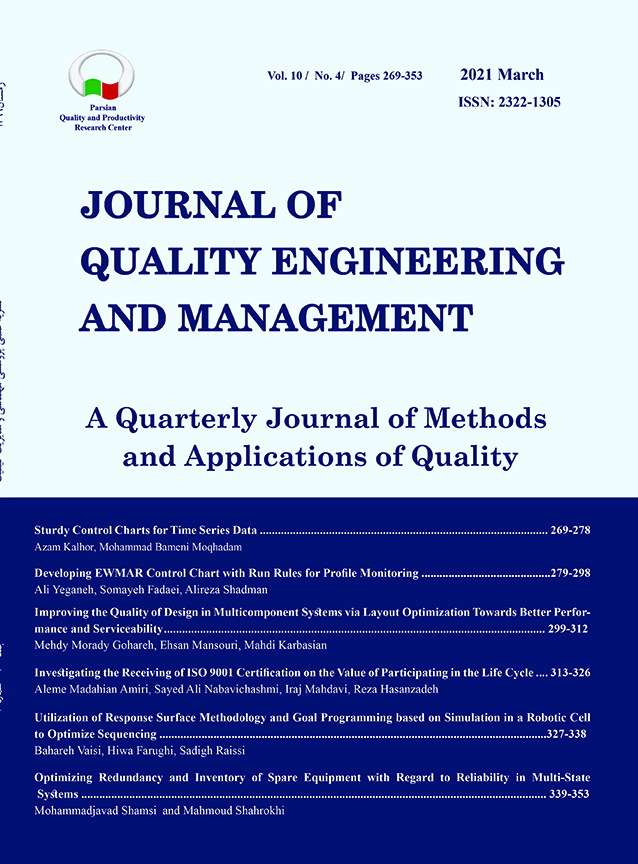
Improving Service Quality Using a Structural Model of the Impact of Information Literacy on Agile Management: A Case Study of the Cultural and Artistic Organization of Tehran Municipality

Document Type : Original Article

Authors

Department of Management, Faculty of Management, Shahid Beheshti University, Tehran, Iran.

Abstract
In today’s competitive world, organizations are constantly confronted with internal and external environmental changes. On the other hand, with the rapid advancement of information technology, effective and efficient use of this technology to improve the quality of leading manufacturing or service industries has become inevitable. Providing electronic services within organizations plays a key role in enhancing service quality, customer satisfaction, and achieving competitive advantage. Employees’ information literacy is a critical factor in enabling organizations to leverage this tool effectively. Given the importance of this issue, the present study examines the impact of information literacy on organizational agility. Technological innovations and diverse information sources alone, without information literacy, do not lead to organizational learning, responsiveness to change, flexibility, or ultimately, high-quality services. Therefore, a new form of organization that views environmental changes as opportunities is necessary. Such organizations require employees who can collect, organize, evaluate, and analyze large volumes of information to advance the organization. Clearly, the absence of these skills leads to organizational failure in the current competitive landscape. Information literacy involves lifelong learning skills. It enables individuals to develop their thinking to identify information needs, search for and optimally utilize information sources and systems, and evaluate work processes, thereby transforming them into information-savvy employees. The aim of this study is to investigate the factors through which employees’ information literacy affects organizational agility. The statistical population of this research includes employees of the Cultural and Artistic Organization of Tehran Municipality. According to the research findings, the impact of various dimensions of information literacy on organizational agility was confirmed through statistical analyses.

Keywords